
What If We Let Kids Rebrand the Future?
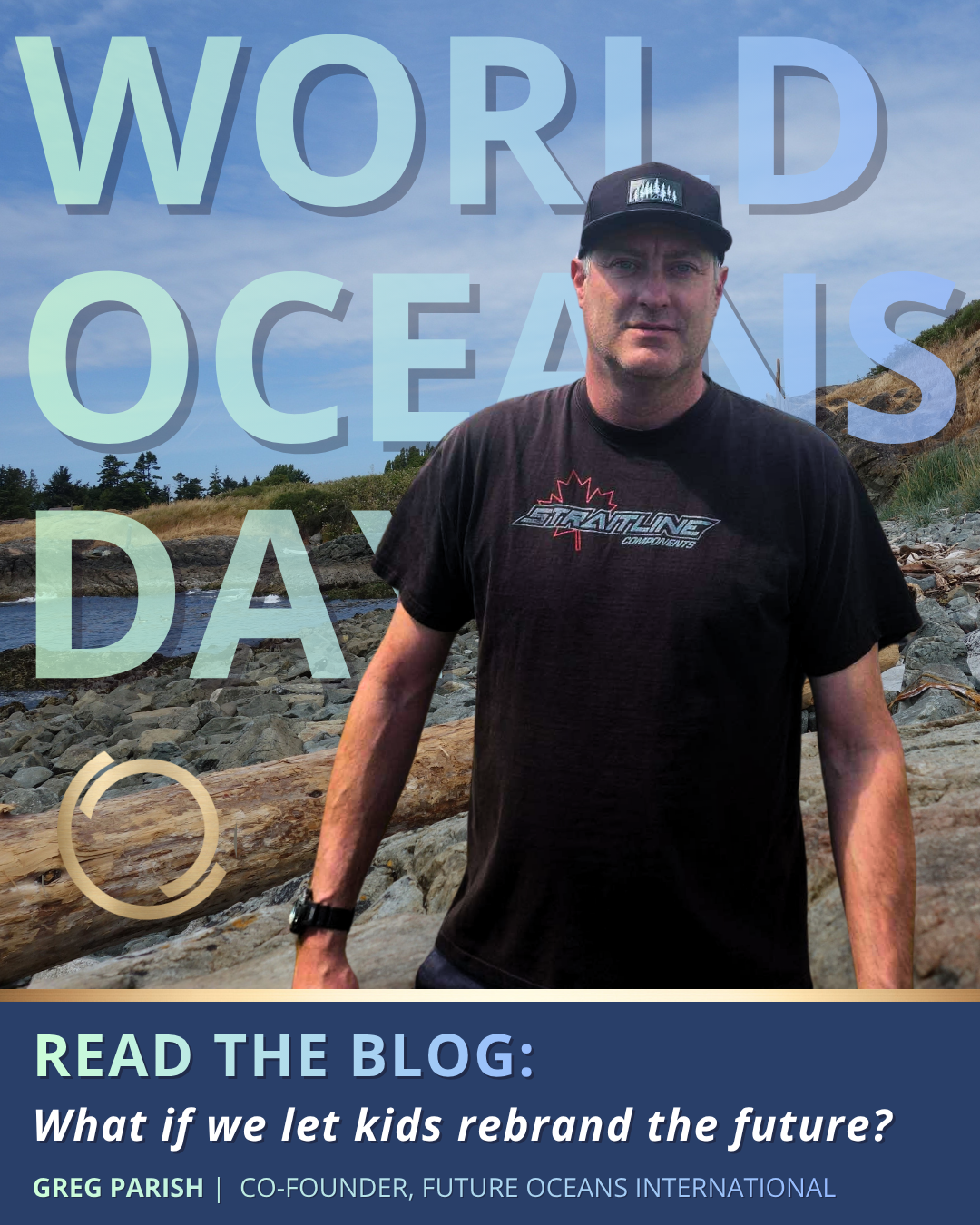
By Greg Parish, Co-Founder of Future Oceans International
At Future Oceans International, we spend a lot of time talking about the future of our oceans, our coastlines, and the waste we leave behind.
But recently, I started wondering something uncomfortable:
What if adults are too used to the problem to truly rethink it?
Plastic packaging has become so normal that most of us barely notice it anymore. We tear it open, throw it away, and move on. Coffee lids. Shipping envelopes. Candy wrappers. Bubble wrap. Takeout containers. Endless layers of waste surrounding products we use for minutes.
Somewhere along the way, we accepted this as “just how life works.”
Kids haven’t.
I have two daughters — ages 10 and 12 — and lately I’ve started asking them questions about packaging waste, ocean pollution, and consumer habits.
Their reactions were immediate.
“Why do bananas need plastic?”
“Why do toys come with garbage wrapped around them?”
“Why do companies make things that are impossible to recycle?”
“If we can send people to space, why can’t we invent packaging that disappears safely?”
“Why are adults okay with this?”
Honestly, they’re asking better questions than most boardrooms.
And maybe that’s exactly the point.
At Future Oceans International, creativity has always been central to our mission. We use storytelling, visual art, fashion, photography, and immersive experiences to spark conversations about ocean conservation and environmental responsibility.
But now I’m wondering if the next evolution of our foundation should involve something even more powerful:
Giving young people permission to challenge the systems adults created.
Not just teaching kids about sustainability.
Listening to them.
What if children redesigned grocery packaging?
What if students invented reusable delivery systems?
What if schools hosted “Waste Hackathons” where kids competed to eliminate garbage from everyday products?
What if major brands invited youth panels to critique their packaging designs honestly?
Because here’s the truth:
Children still believe impossible things can be fixed.
Adults often focus on what is realistic.
Kids focus on what is right.
And history shows that breakthroughs usually begin with people willing to sound unrealistic at first.
My daughters have already started sketching ideas:
Reusable candy containers you return like library books.
Food wrappers made from compostable seaweed films.
QR-code packaging that teaches consumers how to reuse items creatively instead of discarding them.
Shipping boxes designed to fold into toys, art projects, or storage containers instead of becoming trash.
Not every idea is practical.
That’s not the point.
The point is imagination.
Innovation starts when someone is brave enough to ask:
“Why are we doing it this way at all?”
The environmental movement doesn’t just need more statistics.
It needs more creativity.
More courage.
More uncomfortable questions.
More dreamers.
And maybe the next generation is already ready to lead.
So here’s our challenge:
If you’re a parent, teacher, artist, designer, student, or business owner, ask a young person one simple question:
“What packaging around you feels stupid or wasteful?”
Then listen carefully.
Their answers might help shape the future faster than we think.
At Future Oceans International, we believe protecting the oceans starts with changing human behavior and reimagining the systems we’ve accepted for too long.
Maybe the people best equipped to reimagine them are the ones who haven’t accepted them yet.
